When Is It Going to Rain in My Area Again
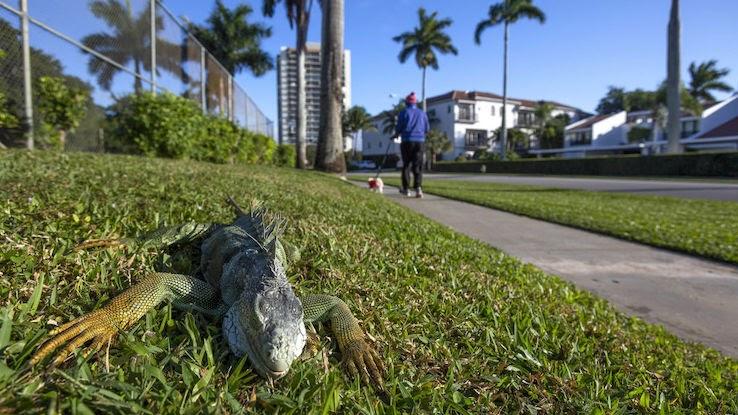
If y'all're looking to have a myth debunked, you've come to the wrong place. "Frozen Iguanas Falling From Florida Trees" is neither the name of a schlocky B-rated horror motion-picture show nor an urban legend. It's something that really happens, which, if you lot're a Floridian yourself, y'all might be somewhat familiar with. But the rest of united states of america may just exist getting used to the fact that it rains more than cats and dogs in The Sunshine Land. In addition to hurricanes and alligators, there's another form of reptilian precipitation to watch out for.
But just why does this phenomenon happen? The short answer is that iguanas simply don't belong in Florida; they're non native to the state, and those living at that place aren't used to the extremes of Florida atmospheric condition nevertheless. But there's a longer answer, and it'southward a fascinating tale of invasive species, animal physiology and one of the strangest weather condition reports you'll ever meet.
Iguanas Are Cold-Blooded, Which Induces Lethargy
When a creature is cold-blooded, its body temperature changes along with shifts in the ambient temperature that occur in the air around the animal. This lies in contrast to warm-blooded animals, which are able to maintain internal trunk temperatures college than those of their surround due to their differing metabolic processes. Snakes, crocodiles, alligators, turtles and lizards, all of which are reptiles, are generally cold-blooded. When temperatures around them drop, so does their internal temperature. This process also happens to iguanas — even the iguanas that call Florida dwelling.
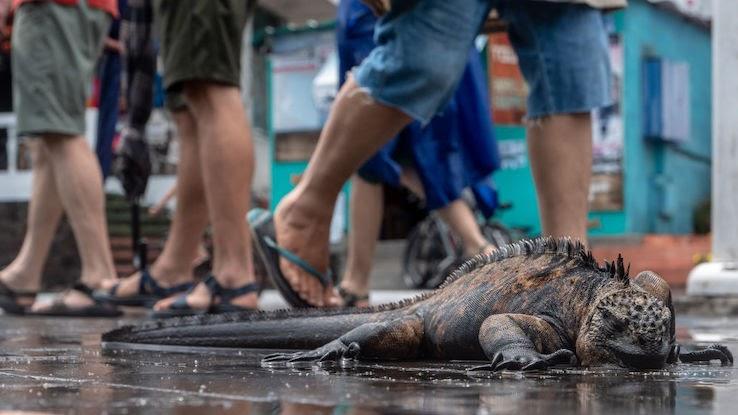
Equally the temperature in the air — and, thus, the iguanas' blood — drops, they become increasingly inactive. When external temps accomplish virtually 45 degrees Fahrenheit, iguanas exposed to these atmospheric condition enter a stunned or dormant state. They'll gradually become so sluggish and so immobilized that they may await dead — only aren't. These lethargic lizards are really still breathing, and all their bodily functions are continuing. Merely those functions are taking identify much more slowly because the iguanas' claret is moving around their bodies at a greatly reduced rate.
That said, if information technology stays in the 40s longer than eight hours, those persistent cold temperatures can become fatal to iguanas. But simply how common cold does it have to exist to trigger lethargic responses? That depends. Ron Magill, Zoo Miami's communications director, told CNN, "The temperature threshold for when iguanas begin to go into a dormant state depends greatly on the size of the iguana… By and large speaking, the larger the iguana, the more than cold it tin tolerate for longer periods." That may have to exercise with the fact that the larger lizards have more blood in their bodies so they can retain warmth in their blood a bit longer than the smaller reptiles.
The Lizards Are Diurnal — and They Accept Unconventional Sleeping Spots
At that place may not be many things that people and iguanas take in common, simply the period of time when they're awake each day is i. Diurnal animals similar iguanas are agile during daylight hours and inactive at night when they sleep or balance. Because iguanas are already slow or sleeping at dark when temperatures are most likely to attain their lowest points, that's when iguanas are nigh vulnerable to the lethargy-inducing furnishings of a cold snap. The nighttime temperatures and the cold ambient temperatures compound.
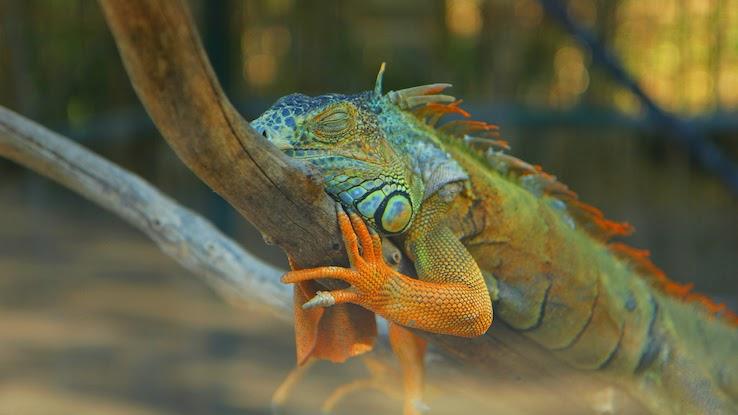
At that place's 1 more thing almost iguanas' diurnal nature to know about, though. Information technology'due south where they tend to sleep that matters — and that leads to "iguana rain." Iguanas typically wander the basis or stay slightly secluded in brushy areas during the solar day. But they then sleep up in the relative safety of tree branches.
A typical slumbering iguana is perfectly capable of remaining rubber and secure in a tree until morning time. Notwithstanding, when iguanas are rendered lethargic or comatose by cold temperatures, their immobility causes them to lose their grip on the branches. Iguanas that succumb to the coldest overnight temperatures in Florida merely fall out of bed — and onto the basis to be found past startled Floridians when the sun rises.
They're Invasive and Aren't Suited for Florida'due south Climate
One might think that iguanas would've evolved to deal with Florida'southward temperatures without going through this issue — they're native to rainforests, after all. Merely even if that were ordinarily the case, in that location are a few factors working confronting iguanas in this regard.
First, temperatures depression enough to trigger this event are pretty uncommon in Florida, and so the lizards aren't exposed to these dips often enough to develop any kind of evolutionary response. Depression lows happen occasionally — it's often January when they practice occur — just Florida temperatures in the 40s are by far the exception rather than the rule.
While Florida does have a pocket-sized number of native iguana species, the vast majority of these lizards in Florida — including the most mutual green iguana, a species that'due south helpfully named Iguana iguana — aren't native to Florida at all. They're actually invasive, so they haven't adapted to the land's (very) occasional dank atmospheric condition.
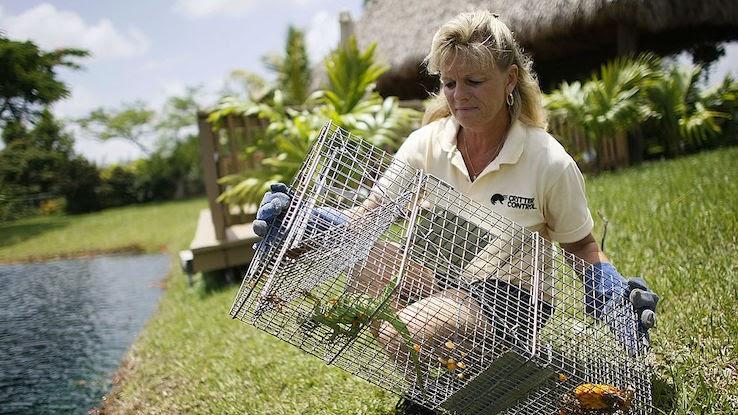
Co-ordinate to the Florida Fish and Wildlife Conservation Commission, there are over xl non-native iguanas and relatives calling The Sunshine State home. These transplants were introduced to Florida as a result of the pet trade. In 1995 lone, over 800,000 green iguanas were imported into the United States from their native homelands — much warmer countries like Honduras, El Salvador, Panama and Colombia. Over time, and then many iguanas escaped or were released past pet owners into the wild that they established a presence throughout the country.
No, That Iguana Is (Probably) Non Dead
In most cases, an iguana that you might detect lying on the ground under a tree showtime thing in the morn isn't dead and won't dice from the cold snap. Rather, it's but immobilized or comatose due to the common cold. As the temperatures increase around the iguana and it'due south exposed to sunshine, the iguana's blood temperature will increase, too.
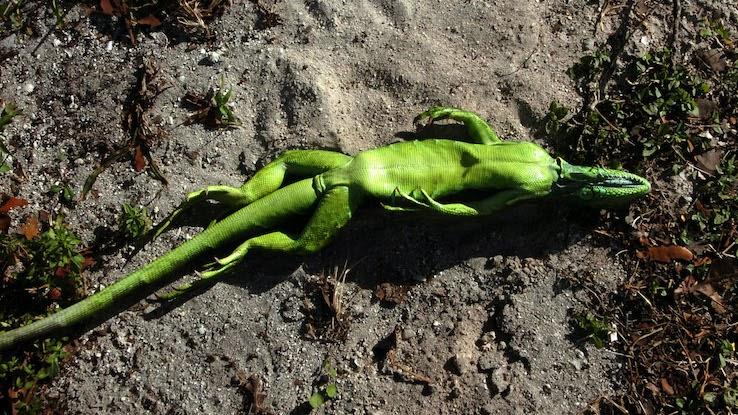
Gradually, the iguana will go more than energetic and scamper abroad. As the Miami Zoo's communications director mentioned, though, very common cold temperatures can impale small iguanas, but many only milkshake off the cold (and whatsoever falls from trees) with the inflow of warmer temperatures and sunshine.
With this in listen, it probably won't exist then startling next time y'all hear most weather forecasts — yes, the Miami National Weather Service has issued them before — for raining iguanas in Florida. In add-on to having the do good of this full general introduction to the reptile-related implications of cold snaps, though, you tin can sometimes count on Florida weather forecasters to give you all the information you demand fifty-fifty if some of information technology is definitely not data you want. (Check out this story near a Florida conditions forecast that went style beyond the probability of precipitation, humidity and expected high and low temps.)
So, if yous e'er should hear the telltale slap of an iguana hitting the ground in the cool temperatures of a January Florida night, don't be alarmed. Iguana rain is normal. Weird, just normal.
Source: https://www.reference.com/science/why-rain-iguanas-florida?utm_content=params%3Ao%3D740005%26ad%3DdirN%26qo%3DserpIndex
0 Response to "When Is It Going to Rain in My Area Again"
Post a Comment